Pregnancy changes everything about how your body moves, what it needs from exercise and how it responds to physical loading. The guidance most expectant mothers in Hong Kong receive from their obstetrician is accurate but general: stay active, avoid high impact, listen to your body. That is the right starting framework. It is not, on its own, a sufficient guide to what kind of movement will genuinely serve you through each trimester.
Prenatal Pilates addresses the specific physiological demands of pregnancy in a way that no other movement system does consistently. It is not yoga adapted for pregnant women. It is not a general fitness class with certain movements removed. When delivered by an instructor with specific prenatal certification, it is a precise programme that changes alongside your body through each stage of the pregnancy and continues into postnatal recovery.
This guide covers what that programme involves, why the certification of the instructor matters enormously and what you can realistically expect Pilates to do for you during and after your pregnancy in Hong Kong.
Why Pregnancy Is a Specific Movement Context
The physiological changes that pregnancy produces in the body are progressive and cumulative. By the second trimester, the relaxin hormone has increased the laxity of the ligaments and connective tissue throughout the body, not just in the pelvis. The centre of gravity has shifted anteriorly, placing new demands on the lumbar spine and hip extensors. The abdominal wall has begun to stretch, which progressively reduces the deep core’s ability to stabilise the pelvis and spine.
By the third trimester, these changes are significant enough that exercise which was appropriate in the first trimester may be contraindicated. Certain positions become uncomfortable or unsafe as the uterus enlarges. Breath mechanics need to be modified because the growing uterus reduces the downward movement of the diaphragm.
An instructor without specific prenatal training may be aware of the headline contraindications but is unlikely to understand the progressive nuance of how each trimester changes the movement requirements. This is why prenatal Pilates delivered by a generalist instructor, however well intentioned, is fundamentally different from prenatal Pilates delivered by someone with specific certification.
First Trimester: Building the Foundation
The first trimester is the ideal time to establish the movement foundations that will carry you through the rest of the pregnancy. If you are new to Pilates, the learning curve is manageable at this stage because the physical changes are still relatively minor and the body can adapt to new movement patterns without the complications of a more advanced pregnancy.
The focus in the first trimester is on developing deep core awareness, specifically the connection between the transversus abdominis, the pelvic floor and the breath. This connection is the functional foundation of everything that follows. Clients who establish it clearly in the first trimester consistently report a more comfortable and better supported second and third trimester.
Fatigue and nausea can make consistent attendance challenging in the first trimester. A good prenatal Pilates instructor will work with your energy levels rather than against them, adjusting the session intensity accordingly.
Second Trimester: Adaptation and Strength
The second trimester is typically when clients feel well enough to train consistently and the physical changes are significant enough to require programme adaptation. The growing bump changes the biomechanics of virtually every exercise, and positions that were appropriate in the first trimester need to be modified.
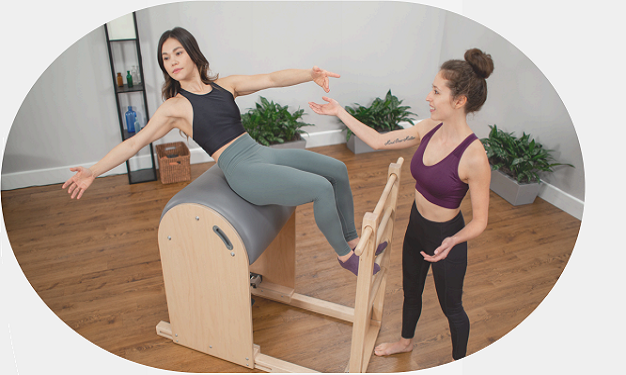
Supine positions with the trunk flat become progressively less appropriate as the uterus grows and begins to compress the inferior vena cava. A good prenatal Pilates instructor will incline the torso using the Reformer carriage or bolsters, maintaining the training stimulus while removing the circulatory compromise.
The second trimester focus is on building the postural strength and hip stability that will be needed in the third trimester. The lumbar extensors and hip flexors are under increasing load from the anterior weight shift of the growing bump, and targeted work to counterbalance this loading significantly reduces the lower back and pelvic pain that many pregnant women accept as inevitable.
At DEFIN8 FITNESS Hong Kong, prenatal Pilates sessions are individually designed for each trimester and delivered privately by instructors with specific prenatal certification.
Third Trimester: Preparation and Comfort
The third trimester shifts the programme focus from strength building toward decompression, breath preparation and postural maintenance. The body is working hard enough sustaining the pregnancy without adding significant additional physical stress, and the best training at this stage supports comfort and preparation rather than pushing fitness levels.
Pelvic floor work in the third trimester is particularly important. The pelvic floor needs both strength and the ability to fully release, because the coordination between contraction and release is what makes the birth process physiologically efficient. Many antenatal programmes focus exclusively on strengthening the pelvic floor and neglect the relaxation component, which is at least as important.
Breathing exercises that prepare the body for the breathing patterns of labour are also a specific focus in good prenatal Pilates programming. The breath mechanics of active labour are different from everyday breathing, and practising them in the third trimester means they are available as an instinctive tool when they are needed most.
Postnatal Pilates: Recovery With Purpose
The postnatal period begins the moment the baby arrives and the body starts returning to its pre-pregnancy state. This process is not automatic or linear, and the six week clearance appointment that most mothers receive is not a comprehensive fitness assessment. It is a general check that acute recovery is proceeding normally.
Postnatal Pilates typically begins between six and eight weeks after a vaginal birth and eight to twelve weeks after a caesarean, following medical clearance. The initial focus is on reconnecting with the deep core and pelvic floor, assessing the extent of any diastasis recti and establishing a safe baseline from which to progress.
The postnatal Pilates programme at DEFIN8 FITNESS specifically addresses diastasis recti repair, pelvic floor rehabilitation and the progressive rebuilding of functional core strength, with the pace of progression determined entirely by the individual’s recovery stage.
Final Thoughts
Prenatal Pilates in Hong Kong delivered by a properly certified instructor is one of the most evidence supported investments you can make in your physical experience of pregnancy and recovery. The returns extend well beyond the pregnancy itself, building movement habits and body awareness that remain useful for years afterward.
The most important decision is choosing an instructor and studio with specific prenatal credentials rather than a general Pilates background. The difference in what they understand about your body at each stage of the process is the difference between a programme that genuinely serves you and one that simply avoids obvious mistakes.
| Certified prenatal and postnatal Pilates sessions available now at DEFIN8 FITNESS. Book your prenatal Pilates consultation at defin8fitness.com |