The comparison between Pilates and GYROTONIC is a regular conversation in Hong Kong’s movement and wellness community, particularly among clients who have a solid foundation in one method and are curious about whether adding the other would meaningfully improve their physical development.
The honest answer is that comparing them as alternatives misses the point. They are not competing approaches to the same movement goals. They are complementary systems that address different physiological dimensions of movement quality, and the clients who train in both consistently describe a qualitative shift in how their bodies feel and move that neither method produces as completely on its own.
The Foundational Difference Between Pilates and GYROTONIC
Pilates is a stability-first movement system. Its foundational principle is that controlled, precise movement originating from a stable core produces better physical outcomes than effort-driven, unstable movement. The method builds deep core control, postural alignment and functional strength through exercises that progressively challenge stability while maintaining the precise movement quality that the system is built around.
GYROTONIC is a mobility-first movement system. Its foundational principle is that the body is designed for three-dimensional, circular movement, and that health and physical vitality depend on maintaining the full range of this movement throughout life. The method uses specialised equipment to guide the body through flowing, circular patterns that decompress the spine, mobilise the joints in all planes and develop the coordination and proprioceptive awareness that full-range, three-dimensional movement requires.
Neither of these descriptions is complete without the other. Pilates without GYROTONIC risks developing stability at the expense of mobility over time. GYROTONIC without Pilates risks developing mobility without the stability and control that makes it safe and functional under load.
What Pilates Specifically Develops That GYROTONIC Does Not
- Deep stabilising muscle activation: The transversus abdominis, multifidus and deep hip rotators are specifically targeted in Pilates through exercises that require their precise engagement. GYROTONIC training does not specifically isolate and retrain these muscles in the same way
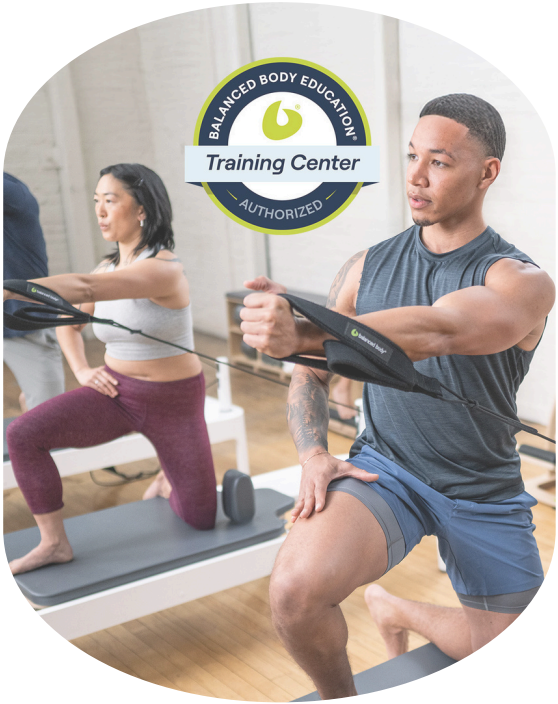
- Progressive resistance through spring mechanics: The Reformer’s spring system develops eccentric and isometric strength through the full range of motion in a way that GYROTONIC’s pulley system does not specifically replicate
- Postural alignment correction: The structured approach to neutral spine, pelvic position and scapular alignment in Pilates directly addresses the postural dysfunction that desk work produces. GYROTONIC works with the body’s current alignment rather than specifically correcting it
- Rehabilitation-specific exercise modification: The precision of Pilates exercise design allows extremely specific modification for injured tissue, making it the more appropriate starting point for clients with active injuries or post-surgical recovery needs
What GYROTONIC Specifically Develops That Pilates Does Not
- Three-dimensional spinal articulation: The circular movement patterns of GYROTONIC mobilise the spine in all three planes simultaneously, developing the fluid, three-dimensional movement capacity that Pilates stability work does not specifically produce
- Joint decompression: The flowing, circular patterns in GYROTONIC create traction through the spine and major joints that Pilates loading does not replicate. Clients with spinal compression or joint stiffness often find immediate relief from GYROTONIC sessions that Pilates work does not produce to the same degree
- Proprioceptive richness: The complex, multi-directional movement patterns of GYROTONIC develop a level of body awareness and spatial intelligence that develops the nervous system in ways that the more linear demands of Pilates do not fully address
- Movement flow and expressiveness: GYROTONIC trains the body to move through full ranges with fluency and ease, which produces a qualitative sense of movement freedom that Pilates precision does not specifically target
How the Two Methods Work Together for Hong Kong Clients
For DEFIN8 FITNESS clients who train in both Pilates and GYROTONIC, the relationship between the methods becomes apparent relatively quickly. The Pilates sessions produce the stability and control that allows the GYROTONIC sessions to be more productive and more physically satisfying. The GYROTONIC sessions open ranges of motion that the Pilates sessions can then load and strengthen.
This reciprocal reinforcement is why the combination produces outcomes that neither method achieves alone. The body becomes simultaneously more stable and more mobile, more controlled and more fluid, more precisely strong and more freely expressive in its movement.
Both Reformer Pilates classes and certified GYROTONIC sessions are available at DEFIN8 FITNESS, with instructors certified in both methods available for private sessions that integrate both practices within a single training relationship.
Final Thoughts
The question of Pilates vs GYROTONIC in Hong Kong is best answered by understanding that the two methods are not in competition. They are working on different dimensions of the same physical goal: a body that is strong enough to be safe, mobile enough to be free, and coordinated enough to express both qualities in everything it does.
The most physically capable and most comfortable bodies in Hong Kong’s active community are those that have invested in both. The journey into both begins with one and the other naturally follows.
Discuss a combined Pilates and GYROTONIC training programme with DEFIN8 FITNESS and begin developing the full range of what your body is designed to do.
| Train in Pilates and GYROTONIC at Hong Kong’s leading movement studio. Book at DEFIN8 FITNESS. Explore the full programme at defin8fitness.com |