The postnatal period is one of the most physically demanding recoveries the human body manages and one of the least supported from a structured movement perspective in Hong Kong. The six-week check that most mothers receive after birth is a medical assessment of healing. It is not a functional movement screen, a pelvic floor evaluation or a specific guide to what exercise is safe and productive at this stage.
The result is that many new mothers in Hong Kong either avoid exercise entirely in the early postnatal period out of appropriate caution, or return to their pre-pregnancy exercise routines based on a general clearance that does not account for the specific physical changes that pregnancy and birth have produced. Both approaches leave something important unaddressed.
This guide provides the specific information that the standard postnatal care pathway does not: what exercise is safe and beneficial in the early postnatal period, what to avoid and why, when to start different types of activity and why certified postnatal Pilates in Hong Kong is the most evidence-supported first step toward full physical recovery.
The First Six Weeks: What Is and Is Not Appropriate
The first six weeks after birth are a period of acute healing. Regardless of whether the birth was vaginal or caesarean, the body has undergone significant physical stress and requires time for the initial tissue healing to progress before progressive loading is introduced.
This does not mean complete rest. Gentle breath awareness exercises, light walking that does not cause increased pelvic heaviness or pain, and the gradual reintroduction of daily movement are appropriate from the early days after birth. What is not appropriate in the first six weeks is any exercise that significantly loads the abdominal wall, the pelvic floor or the cardiovascular system beyond the demands of daily life.
The most important and most commonly ignored guidance for the first six weeks is to stop any activity that produces symptoms: increased bleeding, pelvic pressure, leaking, pain at the caesarean scar or perineal stitches, or a sensation of things falling down or out from the pelvis. These are signals that the exercise is exceeding what the healing tissue can currently manage.
From Six Weeks: What Postnatal Exercise in Hong Kong Should Look Like
The Reconnection Phase — Weeks 6 to 12
Medical clearance at six weeks signals that acute healing is progressing normally. It does not mean the body is ready to return to pre-pregnancy exercise. The first priority from six weeks is what postnatal specialists call reconnection: systematically reestablishing the coordination between the deep core, the pelvic floor and the breath that pregnancy progressively disrupts.
This phase looks gentle from the outside. The exercises are low-load, breath-coordinated and focused on specific muscle activation rather than general fitness development. Their significance lies not in what they visibly produce but in what they establish as a foundation for everything that follows.
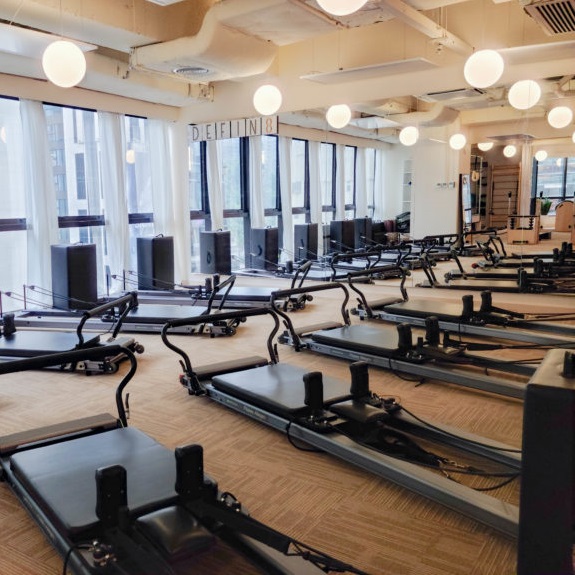
The postnatal Pilates programme at DEFIN8 FITNESS begins with this reconnection phase and uses it as a genuine prerequisite for subsequent loading rather than rushing past it to more immediately visible exercise.
Returning to Full Exercise — 3 to 6 Months’,
The timeline for returning to full exercise after birth depends on multiple factors: the birth experience, the extent of any diastasis recti, the current status of the pelvic floor and how the body has responded to the progressive loading of the reconnection phase. There is no universal timeline. The most common mistake is using time alone as the criterion: I’m twelve weeks postnatal therefore I can go back to the gym. The body tells you what it is ready for through its symptoms, not through elapsed time.
Why Certified Postnatal Pilates Is the Most Evidence-Supported First Exercise Step
The exercise format that most specifically addresses the physical changes of the postnatal body is certified postnatal Pilates. It is the format most directly designed for the reconnection work that the early postnatal period requires, the format most specifically equipped to address diastasis recti and pelvic floor dysfunction, and the format whose progressive loading pathway most closely matches the physiological timeline of postnatal recovery.
This is not a marketing claim. It is a reflection of the fact that Pilates was developed around the specific mechanics of the deep core and pelvic floor that postnatal recovery most needs to restore. A certified postnatal Pilates instructor is trained to assess these specific dimensions of postnatal physical function and to design a programme around the assessment findings rather than around a generic postnatal class format.
DEFIN8 FITNESS in Central Hong Kong has been delivering certified postnatal Pilates for a decade. The pre and postnatal programme includes a specific postnatal assessment before any exercise is prescribed and adapts continuously based on the individual’s recovery trajectory.
What Postnatal Exercise to Avoid in Hong Kong
- Sit-ups, crunches and double leg raises: These exercises increase intra-abdominal pressure in a direction that stresses a weakened linea alba and can actively worsen diastasis recti
- High impact activities including running, jumping and HIIT: Not appropriate until the pelvic floor is demonstrably ready to manage the impact loads, which in practice means after a proper postnatal assessment confirms this
- Heavy lifting: The pelvic floor needs to be able to generate adequate counter-pressure before it can safely manage significant loads. This is assessed through function, not by time elapsed since birth
- Any exercise that produces symptoms: Leaking, prolapse sensations, pain, significant pelvic pressure or increased bleeding are all signals that the exercise is exceeding current capacity
Final Thoughts
Postnatal recovery exercise in Hong Kong deserves the same quality of specific, expert guidance that prenatal care ideally provides. The exercises that best serve postnatal recovery are not the most vigorous or the most visible. They are the ones most specifically designed for the physical state that birth leaves the body in and the trajectory of recovery that the postnatal body needs to follow.
Contact DEFIN8 FITNESS to discuss your birth experience and start a postnatal Pilates programme designed around where your body actually is.
| Start your postnatal recovery with certified expert Pilates at DEFIN8 FITNESS Hong Kong.Book at defin8fitness.com/pre-post-natal |