Running is the most accessible form of exercise in Hong Kong and consistently one of the most popular, with the city’s extensive trail networks, seafront promenades and public parks drawing runners at every level from casual weekend joggers to competitive trail racers. It is also one of the exercise forms most consistently associated with overuse injuries, particularly in the hips, knees and lower back.
The connection between running injury and inadequate core and hip stability is well documented in sports medicine research. The connection between Pilates and improved running economy, reduced injury frequency and extended running careers is equally well supported. This guide explains the specific mechanisms through which Pilates benefits runners and how Hong Kong runners are integrating it into their training weeks.
Why Runners Get Injured and What This Has to Do With Pilates
Most running injuries are not caused by running itself but by the biomechanical consequences of running with inadequate stability in the hip and trunk. The single leg stance phase of running, where the entire body weight is supported on one foot while the pelvis must maintain its level position and the trunk must remain stable over the supporting leg, requires a level of hip abductor and deep core strength that most recreational runners have never specifically developed.
When this stability is absent, compensatory patterns emerge. The pelvis drops on the swing leg side, which is called a Trendelenburg gait. The knee of the stance leg moves medially under load. The trunk rotates excessively with each step. All of these compensation patterns place stress on structures that are not designed to absorb it repeatedly, which is how iliotibial band syndrome, patellofemoral pain and piriformis syndrome develop.
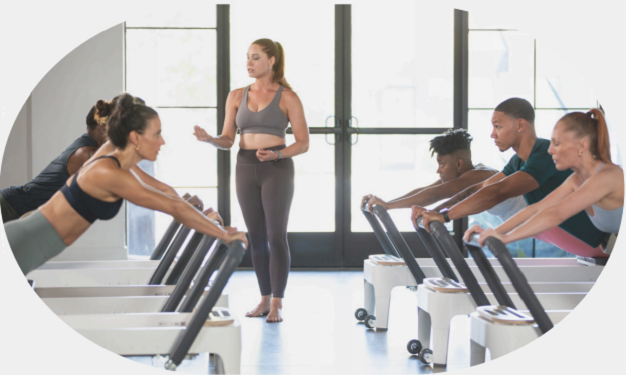
The deep hip stabiliser activation and core stability work in Reformer Pilates at DEFIN8 FITNESS directly targets the single leg stability demands of the running gait, developing the specific strengths that prevent these compensation patterns.
How Pilates Improves Running Economy
Running economy is the oxygen cost of running at a given pace. Better running economy means a faster pace at the same physiological effort, or the same pace at lower physiological cost. It is one of the most significant determinants of running performance beyond raw cardiovascular capacity.
Core stability is a primary driver of running economy because trunk stability directly affects how efficiently the runner can transfer force from the ground through the kinetic chain into forward propulsion. A stable core wastes less energy in lateral and rotational movement that does not contribute to forward progress. An unstable core dissipates energy in compensatory movement and requires additional muscular work to maintain upright posture.
Studies examining the running economy effects of core stability training, including Pilates based programmes, consistently find improvements in running economy of three to five percent over eight to twelve weeks. For a runner whose goal is a faster half marathon time, a three percent improvement in running economy is the equivalent of weeks of additional aerobic base training.
Practical Integration: How to Fit Pilates Into a Running Training Week
The most common concern from runners considering adding Pilates to their training week is that it will take time away from running. The practical reality is that two Pilates sessions per week add approximately two hours to a training schedule that would otherwise be spent on easy recovery runs, which produce significantly less specific benefit than Pilates for the injury prevention and economy goals that most recreational runners are seeking.
- Monday: Easy recovery run 40 minutes. Pilates session 50 minutes
- Tuesday: Interval or tempo run session
- Wednesday: Pilates session 50 minutes
- Thursday: Moderate run. Strength conditioning if included
- Friday: Rest or easy movement
- Saturday: Long run
- Sunday: Rest and recovery
What Runners Notice After 8 Weeks of Adding Pilates
- Reduced hip and knee pain during and after long runs, particularly from the hip stabiliser strength that Pilates develops
- Improved running posture in the later stages of long runs when fatigue typically causes the trunk to collapse and the gait to deteriorate
- Faster recovery between hard sessions from the improved circulation and reduced muscular tension that Pilates produces
- A more comfortable breathing pattern during moderate intensity running from the improved respiratory mechanics that Pilates breath training develops
- Increased confidence on technical trail terrain from the improved balance and proprioception that Pilates exercises specifically train
Final Thoughts
Pilates is not a replacement for running training. It is a complement that makes the running training more effective, the running itself more economical and the running body more durable over the months and years of consistent training that meaningful improvement requires.
For Hong Kong runners who have been managing recurring injuries, watching pace improvements stall or simply looking for an edge that additional running volume is not providing, Pilates is the most evidence supported and practically efficient addition available to the training week.
View the current Pilates class schedule at DEFIN8 FITNESS and choose the session times that fit around your running training.
| Run stronger and further with Pilates at DEFIN8 FITNESS Hong Kong. Book your first Pilates session at defin8fitness.com/schedule-class |